Research & People
Creating International Standards for Digital Identity in the AI Era - Prof. Youm Heung-youl, Department of Information Security Engineering -
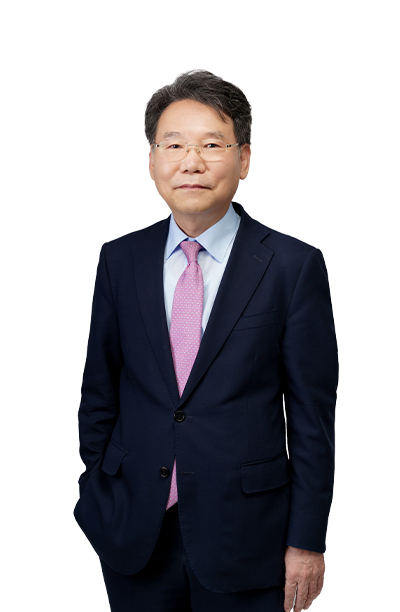
Q. Last month, you were selected for the “International Standards Selection, Infrastructure Development, and Dissemination Project for Personal Information Protection” (total research funding: KRW 2.13 billion). Congratulations. Could you introduce the main objectives of this project and the research and industrial impacts you expect it to have?
A. This project is part of a national R&D and standardization initiative promoted by the Personal Information Protection Commission. Soonchunhyang University serves as the lead institution, while RaonSecure represents the industry sector and Chungbuk National University participates as an academic partner, forming a consortium that secured a project worth KRW 3,375 million. The project will run for seven years, from this year through 2032, with goals that include developing international standards, establishing and revising national and industry standards, and facilitating technology transfer.
To achieve these goals, we have identified several key technologies: decentralized identity management, identity management for agentic AI, and biometric technologies. Based on core technologies such as zero-knowledge proofs, privacy-enhancing technologies, credential generation, and digital identity and wallet, we aim to develop domestic and international standards for digital identity wallets, decentralized identity management, agentic AI identity management and privacy protection, and biometric technologies.
To promote international standardization effectively and achieve the project’s objectives, we plan to establish collaborative networks with overseas organizations and companies such as the FBI and Microsoft, as well as domestic partners including the Open Digital Foundation. Through these efforts, we seek to develop digital identity and delegation technologies needed for agentic AI, standardize them internationally, and incorporate them into products and services, thereby expanding into global markets. Ultimately, the goal of this project is to strengthen international competitiveness in the field of agentic AI identity management.
Q. You served for eight years as Chair of Study Group 17 (Security) within the ITU Telecommunication Standardization Sector (ITU-T), leading the development of more than 70 international standards. Transforming an initial research idea into an international standard seems to require a long timeline and complex collaboration. In your view, what are the key strategies for international standardization research, and what capabilities are most important for researchers?
A. I served as Chair of ITU-T SG17 from 2016 to 2024, leading international standardization for cybersecurity. I currently continue to serve as Head of Delegation (HoD) for the Republic of Korea in ITU-T SG17 and as Vice-Chair of the Telecommunication Standardization Advisory Group (TSAG). In particular, as competition between Western countries such as the United States and emerging powers such as China intensifies in AI security standardization, the development of cybersecurity standards has become increasingly important in the AI era. The most important capability for an international standardization researcher is expertise in the latest cybersecurity technologies. Since English is the working language of standardization activities, strong communication skills in English are also essential. Above all, passion and dedication toward international standardization are indispensable. Because cybersecurity standardization cannot be achieved by a single individual or country alone, collaborative development strategies with leading countries and experts in standardization groups are critically important. Researchers must also possess insight into emerging cybersecurity technologies and proactively pursue international collaboration to standardize areas such as AI security, Zero Trust security, and software supply chain security. This requires preparation for major ITU conferences held every four years, including the Plenipotentiary Conference (PP), the World Telecommunication Standardization Assembly (WTSA), and the World Telecommunication Development Conference (WTDC), where future standardization agendas are shaped. In summary, the most important qualities are passion for international cybersecurity standardization and continuous efforts to study emerging cybersecurity technologies.
Q. You have pioneered international standardization for more than twenty years since 2003, and you have continuously expanded your research areas despite rapidly changing technological environments. How have you overcome challenges and setbacks throughout your long research career? Also, when collaborating with researchers from different countries, what communication style or attitude do you consider most important?
A. To establish leadership in international cybersecurity standardization, two types of activities are necessary. The first is serving in leadership roles, such as chairing standardization groups and guiding decision-making processes. The second is serving as an editor responsible for developing international standards. I have actively contributed in both capacities.
The life cycle of an international standard includes the adoption of a new work item, the development process, formal approval, and ongoing maintenance. Among these stages, the most critical is gaining support for a new work item by convincing participating experts of the need for the proposed standard. In this process, not only the value and industrial impact of the proposed standard matter, but also determining whether similar work is already being undertaken by other standardization organizations. This is commonly referred to as a “gap analysis,” which helps verify the uniqueness and value of a proposed standard. Throughout this process, sincere communication, persuasion, and collaboration with standardization experts from countries such as the United States, the United Kingdom, and Japan are particularly important.
Q. As concerns grow regarding personal data breaches and AI-driven security threats, there has been increasing interest in Decentralized Identity (DID) technologies, one of your research areas. Could you explain, in simple terms, how DID addresses the limitations of existing authentication systems, as well as its current technological maturity and future applications in everyday life?
A. DID refers to decentralized identity management technology. It is a key solution to overcome the limitations of traditional authentication systems. Traditionally, identity verification often requires presenting physical identification documents or repeatedly submitting personal information through centralized identity management organizations to online service providers. This creates risks of personal information leakage and excessive disclosure of personal data. DID technology enables individuals to securely store their identity information and credentials in a mobile wallet and selectively disclose only the information necessary for a particular transaction. Several foundational technologies support DID. These include blockchain technology for ensuring data integrity, digital identity technologies for storing credentials on mobile devices, and trust framework technologies that establish trust among credential issuers, identity holders, and verification entities through public keys and policies. Today, mobile identification systems based on DID are already being used in banks, airports, and many other settings as alternatives to physical plastic cards.
For example, passengers traveling from Gimpo Airport to Jeju previously had to present their physical identification cards. Now, they can conveniently verify their identity using mobile credentials stored on their smartphones. DID is also being used for online age-verification services that confirm whether a user is an adult. In the future, mobile identity technologies are expected to expand into areas such as academic transcripts, graduation certificates, and various other credentials, while also achieving cross-border interoperability. This would allow a person to store a mobile driver’s license in a digital wallet issued in Korea and use it to rent a car in Paris, France, or securely submit academic records to a technology company in the United States.
Q. Is there anything else you would like to share?
A. I joined Soonchunhyang University in September 1990 and retired in February 2024. Since then, as an Emeritus Professor in the Department of Information Security Engineering, I have continued contributing to the university’s reputation both domestically and internationally through media engagement, research activities, graduate student guidance, and international standardization efforts in cybersecurity. As President of the Korea Chief Privacy Officers Council (KCPO), I have also worked to advance the field of personal information protection in Korea, promoting not only privacy protection but also the safe and effective utilization of data. I intend to continue these efforts in the future. In particular, I plan to become even more actively involved in international standardization activities and contribute to the advancement of cybersecurity through the passion and sense of responsibility that have guided me throughout my career. Thank you.