Research & People
Answering Questions Derived from Clinical Practice through Precision Medicine - Prof. Choi Yoon-young, Soonchunhyang University Bucheon Hospital -
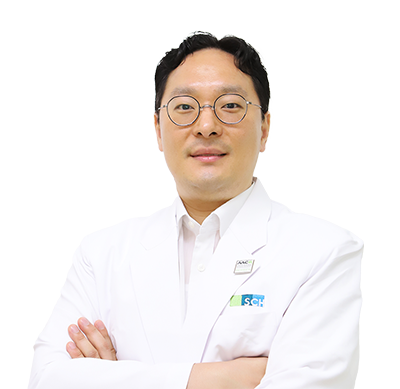
Q. Professor, you have been selected four times for the university’s “Outstanding Paper of the Month” program (October 2023, June 2024, and January and June 2025), and were also consecutively awarded grants under the Ministry of Science and ICT’s Basic Research Program (Pioneering Research) in last year and this year. In particular, you achieved these feats despite intensified competition caused by reductions in government R&D funding last year. Could you tell us about the main objectives of the research projects that were selected and share your thoughts on these achievements?
A. As a surgeon specializing in gastric cancer surgery and also a physician-scientist, I believe I occupy a unique position in translational research. The strength of surgeon-scientists lies not merely in being able to obtain tissue samples, but in understanding what tissues are collected, when they are collected, and under what clinical circumstances they are obtained. At the same time, as a researcher, I understand what types of tissues are needed and at what time points to test a specific hypothesis. When these two perspectives come together within one individual, a synergy emerges in which clinical questions can be directly translated into research design. I have been conducting cancer genomics research for many years. Recently, with the introduction of ultra-high-resolution spatial transcriptomics technologies such as Visium HD and Xenium 5K, it has become possible to analyze interactions within the tissue microenvironment at the cellular level. Combined with these technological advances, both of the selected research projects have become possible.
The pioneering research project selected last year focuses on elucidating the relationship between the duodenum and type 2 diabetes. Although it is well known that diabetes often improves following gastrointestinal bypass surgery or endoscopic duodenal mucosal resurfacing, the underlying mechanisms remain unclear. As a surgeon, I have personally observed patients whose diabetes improved after gastrectomy, and I have long been intrigued by the question: “Why does diabetes improve when food no longer passes through the duodenum?” Through spatial transcriptomic analysis of duodenal stem cells, I aim to uncover the molecular mechanisms behind this phenomenon. I believe this research is particularly meaningful because it may lead to novel therapeutic approaches for “lean diabetes,” a form of diabetes unrelated to obesity—relatively common in Korea and other Asian countries.
The Core Research Project (Type C) selected this year focuses on developing an algorithm to predict lymph node metastasis negativity in patients with early gastric cancer. Currently, when the risk of lymph node metastasis is extremely low, patients may undergo endoscopic submucosal dissection (ESD), a procedure that removes only the cancerous portion of the stomach. However, if a patient falls even slightly outside the established criteria, gastrectomy is generally required. In actual clinical practice, many of these patients are found to have no lymph node metastasis even after surgery. In retrospect, this means that many individuals undergo surgery that may ultimately prove unnecessary. To reduce the number of patients who receive unnecessary gastrectomies, we aim to develop a more precise prediction model for lymph node metastasis based on spatial transcriptomic data and analysis of the tumor microenvironment. If this research is successful, it could expand the number of patients eligible for stomach-preserving treatment and contribute significantly to improving the quality of life of patients with early gastric cancer.
I am grateful that both projects were selected in succession. It feels as though the research direction I have pursued—addressing clinical questions through scientific investigation—has been recognized, which serves as a strong motivation to continue my work.
Q. Since 2024, you and Professor Yun Jong-hyuk of Cheonan Hospital have jointly ran the Cancer Precision Medicine Research Exchange Group, achieving various accomplishments including open seminars, publications in SCIE-indexed journals, and academic awards. Recruiting members and maintaining regular meetings can be challenging. What do you think has been the key to fostering such active collaboration and engagement among researchers within the university?
A. There is no particular secret, to be honest. The group was formed naturally out of necessity. Professor Yun Jong-hyuk of Cheonan Hospital and I are both gastric cancer surgeons, and we shared many of the same clinical questions and challenges. There was also a practical advantage in combining our patient cohorts and datasets, allowing us to conduct studies on a scale that would have been difficult for either of us to achieve on our own. For example, our research of Lynch syndrome required the combined cohorts of both hospitals in order to secure a meaningful number of patients.
The group initially focused on helping clinicians understand the basic terminology required for translational research. Technologies such as genomic analysis and spatial transcriptomics are unfamiliar to many clinicians, so establishing a common language was a necessary first step. From there, we expanded our activities to include collaborative research within the medical system, sharing research findings, jointly preparing grant proposals, and inviting experts in relevant fields to deliver lectures. Because the group’s activities led directly to tangible outcomes such as publications and research grants, participants were able to appreciate the value of the time they invested, which I believe became the driving force behind its sustainability. Ultimately, if researchers are convinced that “better research is possible together rather than alone,” collaboration tends to happen naturally.
Q. While balancing both clinical practice and research, have there been any particularly rewarding moments or memorable experiences that stand out to you?
A. When treating patients with gastric cancer, I often encounter cases in which patients with the same disease stage receive the same treatment yet experience completely different outcomes. A notable example is immunotherapy, specifically immune checkpoint inhibitors, which are sometimes described as “miracle drugs.” Although these therapies can be used when PD-L1 expression is high, they do not work for every patient. As a clinician, one of the most frustrating situations is being unable to answer the question, “Why did this treatment not work for this patient?”
Recently, through spatial transcriptomic analysis, our research team identified a phenomenon of immune ignorance caused by defects in the antigen-presentation mechanism (TAP) in tumors from patients who were PD-L1 positive and therefore expected to respond to immunotherapy, but ultimately did not. The moment we spatially confirmed that CD8+ T cells—immune cells responsible for attacking cancer—had reached the immediate vicinity of cancer cells yet were unable to attack them, I felt a tremendous sense of accomplishment. It seemed as though we had finally uncovered the mechanism behind a phenomenon that had long remained unexplained in clinical practice. Although the findings have not yet been published, I hope they will eventually lead to the development of predictive biomarkers that can help identify suitable patients, reduce unnecessary treatments, and ensure that the right therapy is provided to the right patient.
Ultimately, questions of “Why?” often arise in the clinic, but the answers frequently need to be found in the laboratory. Balancing clinical practice and research is certainly takes a toll physically. However, I believe the greatest strength of a physician-scientist is the ability to take problems observed directly in patients and investigate them through research.
Q. Is there anything else you would like to share?
A. As genomic technologies have advanced rapidly in cancer research, we can now observe things that were previously impossible to see. At the same time, advances in AI have made it possible for individual researchers to analyze these data directly, without relying on large research teams or specialized bioinformaticians. While the barriers to accessing analytical tools have fallen dramatically, the democratization of tools does not automatically mean the democratization of results. Deciding what questions to ask, which tissues to collect and when to collect them, and how to interpret findings within a clinical context—these judgments ultimately come from hands-on experience and domain expertise. Technology does not determine the direction of research.
That is why I believe the role of the physician-scientist will become even more important in the future. We need people who can identify problems in clinical practice, design studies to address them, and translate the results back to patients. It is not an easy path, but I hope more young physicians will become interested in pursuing it. We now live in an era in which the necessary tools are readily available. If you have a good question, nothing will stop you.
Going forward, I will continue to pursue meaningful research both within Soonchunhyang University and in collaboration with researchers outside of the university. Thank you.